In the latest episode of Approximately Correct, we’re checking back in with Jill Kowalchuk, Amii’s education expert, to give us an update on how AI is supporting educators. When we last spoke with Kowalchuk in early 2024, AI was just starting to make its way into the classroom, and no one really seemed to know what role it should play in education. Now, two years later, the technology has changed dramatically. And according to Kowalchuk, so has the perspective on what it could mean for students and teachers.
"I think what's really exciting for me is the opportunity to rethink teaching and learning," she tells hosts Alona Fyshe and Scott Lilwall.
"It really puts the impetus on us as educators to rethink what's going on in our schools and our classrooms."
Loading...
AI is more than a tool
Kowalchuk is now Amii’s Manager of AI Literacy, a term that she says is about more than knowing the basics of how to use artificial intelligence programs. It’s more a movement towards teaching students and educators how to be fluent in AI: being able to collaborate effectively in a way that supports human critical thinking and reasoning.
She argues that AI shouldn’t be used as just a tool, or a replacement for human thinking. Instead, she likes to view it as a “thought partner” that can be used to collaborate and support traditional learning methods.
"When we’ve almost denigrated it to a tool for our views, it's like we're taking away a lot of the nuance from the conversation and what these technologies are really capable of when humans use them in an intentional way," she says.
She discusses her work at Amii, helping develop resources with Alberta teachers and government officials that introduce AI-related competencies into the curriculum.
A new world for educators
The significant advancements in machine learning, particularly generative AI, do create some challenges for teachers, however. Kowalchuk says that traditional ways of assessing a student’s knowledge — things like essays or short-answer questions — are now trivial for gen AI models. As well, there are concerns that some students will have access to the technology, while others may not, leaving them to fall behind. But Kowalchuk stresses that these aren’t reasons to keep AI out of the classroom. Instead, they show how important it is to think carefully about the immense opportunity that it presents, and how it can be best applied to support all learners.
“I think it's really good to stay curious,” she says.
Approximately Correct: An AI Podcast from Amii is hosted by Alona Fyshe and Scott Lilwall. It is produced by Lynda Vang, with video production by Chris Onciul. Subscribe to the podcast on Apple Podcasts or Spotify.
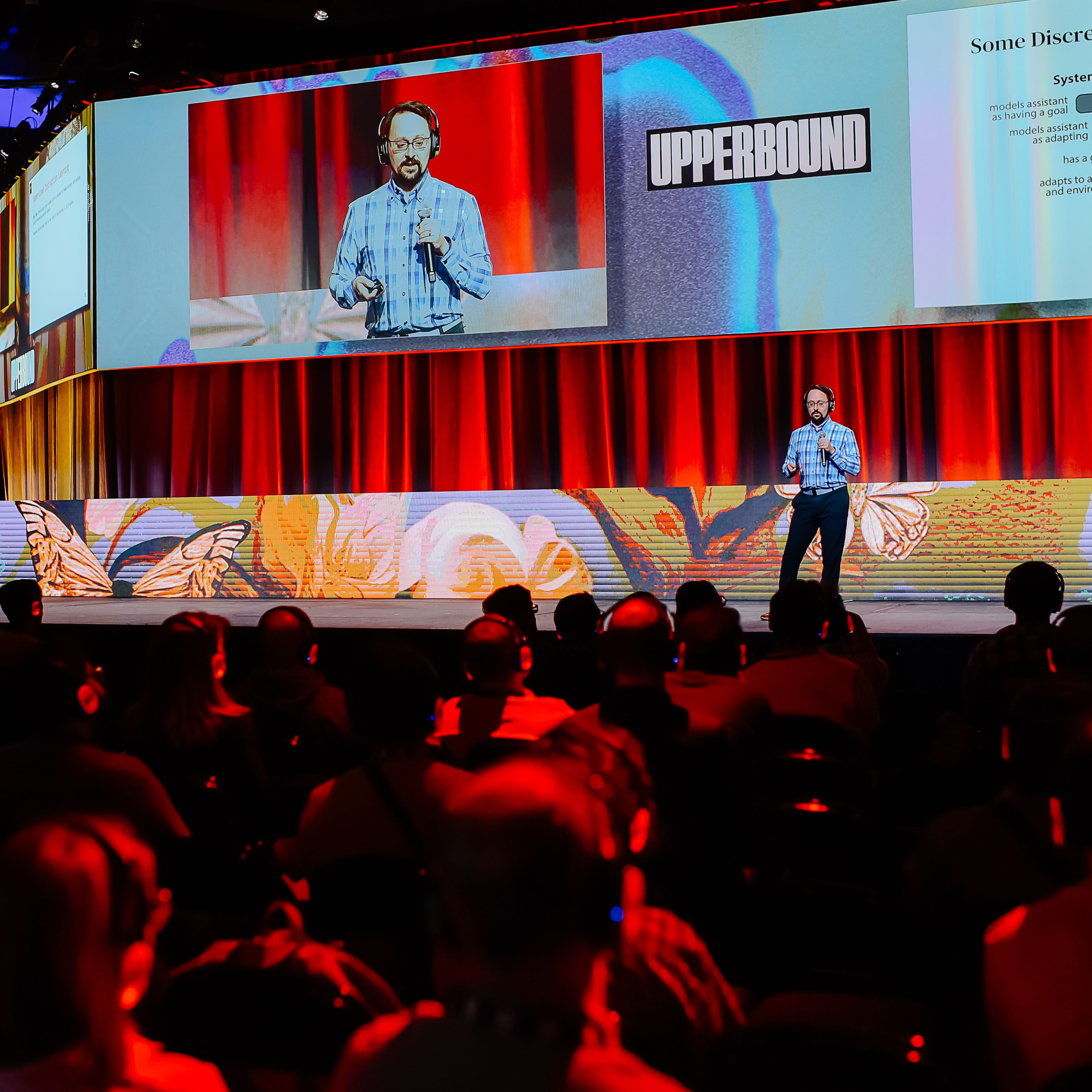
Not Your Average AI Conference
Learn from Leading Minds in AI at Upper Bound
Be one of the thousands of AI professionals, researchers, business leaders, entrepreneurs, investors, and students in Edmonton this spring. Explore new ideas, challenge the status quo, and help shape a positive AI future.