
Amii is proud to share the research that our Fellows, Canada CIFAR AI Chairs, students, and staff will be presenting at the 40th Annual AAAI Conference on Artificial Intelligence in Singapore from Jan. 20 - 27.
The AAAI Conference promotes research in artificial intelligence (AI) and fosters scientific exchange between researchers, practitioners, scientists, students, and engineers in AI and its affiliated disciplines.
This year, Amii researchers are presenting papers on topics that include behavioral game theory with "ElementaryNet," a model designed to predict human decision-making while remaining interpretable, to the MAGIC framework, which uses collaborative LLM agents to identify adversarial attacks that could affect autonomous driving systems. They are also tackling real-world industrial problems, like applying multi-agent pathfinding to optimize complex cable routing during large-scale construction projects.
Want to stay up-to-date on the latest research from the Amii community? Sign up for our monthly newsletter!
Nathan Sturtevant elected AAAI Fellow
Every year, the AAAI elects a handful of researchers as AAAI Fellows, recognizing those who have made significant, long-term contributions to AI research.
This year, Amii Fellow and CIFAR Canada AI Chair Nathan Sturtevant was among those elected for his contributions to "theory and algorithms of heuristic search, pathfinding, and games" as well as his hand in developing benchmarks and educational resources for the topic.
"I’m honored to be recognized as part of such a distinguished group of scholars,” Nathan says.
In addition to Sturtevant, several other Amii researchers are involved with organizing AAI 2026.
Matthew Taylor - Program Co-Chair
Matthew Guzdial - Awards Chair
Kevin Leyton-Brown - Conference Committee Chair
Accepted Papers
*- denotes Amii affiliation
ElementaryNet, A Non-Strategic Neural Network for Predicting Human Behavior in Normal-Form Games
Greg d'Eon, Hala Murad, Kevin Leyton-Brown*, James R. Wright
LINK TO PAPER
Behavioral game theory models serve two purposes: yielding insights into how human decision-making works, and predicting how people would behave in novel strategic settings. A system called GameNet represents the state of the art for predicting human behavior in the setting of unrepeated simultaneous-move games, combining a simple "level-k" model of strategic reasoning with a complex neural network model of non-strategic "level-0" behavior. Although this reliance on well-established ideas from cognitive science ought to make GameNet interpretable, the flexibility of its level-0 model raises the possibility that it is able to emulate strategic reasoning. In this work, we prove that GameNet's level-0 model is indeed too general. We then introduce ElementaryNet, a novel neural network that is provably incapable of expressing strategic behavior. We show that these additional restrictions are empirically harmless, with ElementaryNet and GameNet having statistically indistinguishable performance. We then show how it is possible to derive insights about human behavior by varying ElementaryNet's features and interpreting its parameters, finding evidence of iterative reasoning, learning about the depth of this reasoning process, and showing the value of a rich level-0 specification.
Practical, Utilitarian Algorithm Configuration
Devon R. Graham, Eros Rojas Velez, Kevin Leyton-Brown*
Utilitarian algorithm configuration identifies a parameter setting for a given algorithm that maximizes a user's utility. Utility functions offer a theoretically well-grounded approach to optimizing decision-making under uncertainty and are flexible enough to capture a user's preferences over algorithm runtimes (e.g., they can describe a sharp cutoff after which a solution is no longer required, a per-hour cost for compute, or diminishing returns from algorithms that take longer to run). COUP is a recently-introduced utilitarian algorithm configuration procedure which was designed mainly to offer strong theoretical guarantees about the quality of the configuration it returns, with less attention paid to its practical performance. This paper closes that gap, bringing theoretically-grounded, utilitarian algorithm configuration to the point where it is competitive with widely used, heuristic configuration procedures that offer no performance guarantees. We present a series of improvements to COUP that improve its empirical performance without degrading its theoretical guarantees and demonstrate their benefit experimentally. Using a case study, we also illustrate ways of exploring the robustness of a given solution to the algorithm selection problem to variations in the utility function.
EcoDiffusion, Uncertainty-Aware Emulation of Ecosystem Processes with Conditional Diffusion for Long Sequences with Single-Step Initialization
Ruohan Li, Zhihao Wang, Xiaowei Jia, Gengchen Mai, Lei Ma*, George C. Hurtt, Quan Shen, Zhili Li, Yiqun Xie
No abstract available at this time.
MAGIC: Mastering Physical Adversarial Generation in Context Through Collaborative LLM Agents
Yun Xing, Nhat Chung, Jie Zhang, Yue Cao, Ivor Tsang, Yang Liu, Lei Ma*, Qing Guo
LINK TO PAPER
Physical adversarial attacks in driving scenarios can expose critical vulnerabilities in visual perception models. However, developing such attacks remains challenging due to diverse real-world environments and the requirement for maintaining visual naturality. Building upon this challenge, we reformulate physical adversarial attacks as a one-shot patch generation problem. Our approach generates adversarial patches through a deep generative model that considers the specific scene context, enabling direct physical deployment in matching environments. The primary challenge lies in simultaneously achieving two objectives: generating adversarial patches that effectively mislead object detection systems while determining contextually appropriate deployment within the scene. We propose MAGIC (Mastering Physical Adversarial Generation In Context), a novel framework powered by multi-modal LLM agents to address these challenges. MAGIC automatically understands scene context and generates adversarial patch through the synergistic interaction of language and vision capabilities. In particular, MAGIC orchestrates three specialized LLM agents: The adv-patch generation agent (GAgent) masters the creation of deceptive patches through strategic prompt engineering for text-to-image models. The adv-patch deployment agent (DAgent) ensures contextual coherence by determining optimal deployment strategies based on scene understanding. The self-examination agent (EAgent) completes this trilogy by providing critical oversight and iterative refinement of both processes. We validate our method on both digital and physical levels, i.e., nuImage and manually captured real-world scenes, where both statistical and visual results prove that our MAGIC is powerful and effective for attacking widely applied object detection systems, i.e., YOLO and DETR series.
From Dataset to Real-world, General 3D Object Detection via Generalized Cross-domain Few-shot Learning
Shuangzhi Li , Junlong Shen, Lei Ma*, and Xingyu Li*
LINK TO PAPER
LiDAR-based 3D object detection models often struggle to generalize to real-world environments due to limited object diversity in existing datasets. To tackle it, we introduce the first generalized cross-domain few-shot (GCFS) task in 3D object detection, aiming to adapt a source-pretrained model to both common and novel classes in a new domain with only few-shot annotations. We propose a unified framework that learns stable target semantics under limited supervision by bridging 2D open-set semantics with 3D spatial reasoning. Specifically, an image-guided multi-modal fusion injects transferable 2D semantic cues into the 3D pipeline via vision-language models, while a physically-aware box search enhances 2D-to-3D alignment via LiDAR priors. To capture class-specific semantics from sparse data, we further introduce contrastive-enhanced prototype learning, which encodes few-shot instances into discriminative semantic anchors and stabilizes representation learning. Extensive experiments on GCFS benchmarks demonstrate the effectiveness and generality of our approach in realistic deployment settings.
Meet the people behind the research

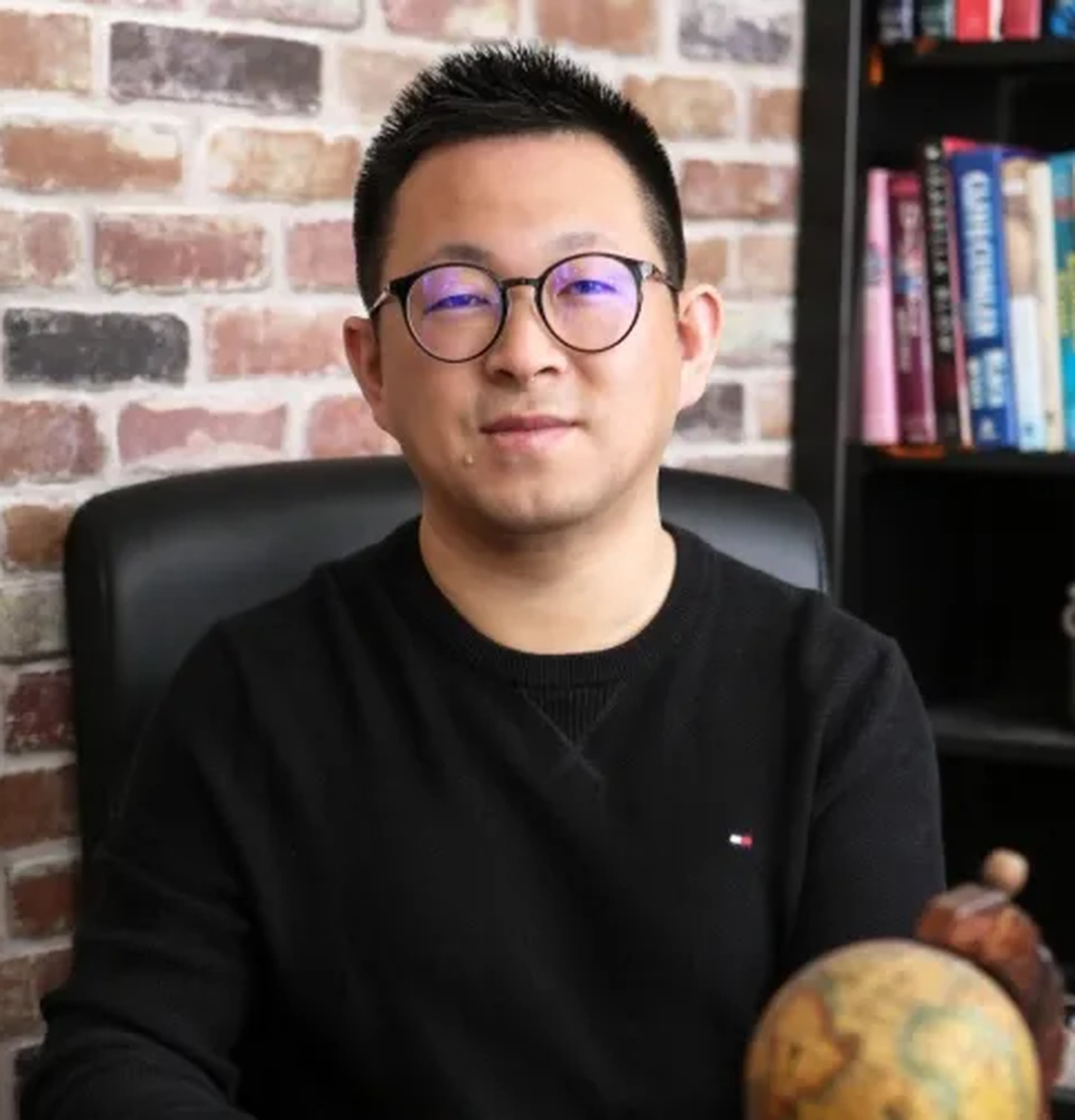

A Parallel CPU-GPU Framework for Batching Heuristic Operations in Depth-First Heuristic Search
Ehsan Futuhi*, Nathan R. Sturtevant*
The rapid advancement of GPU technology has unlocked powerful parallel processing capabilities, creating new opportunities to enhance classic search algorithms. This hardware has been exploited in best-first search algorithms with neural network-based heuristics by creating batched versions of A* and Weighted A* that delay heuristic evaluation until sufficiently many states can be evaluated in parallel on the GPU. But, research has not addressed how depth-first algorithms like IDA* or Budgeted Tree Search (BTS) can have their heuristic computations batched. This is more complicated in a tree search, because progress in the search tree is blocked until heuristic evaluations are complete. In this paper we show that GPU parallelization of heuristics can be effectively performed when the tree search is parallelized on the CPU while heuristic evaluations are parallelized on the GPU. We develop a parallelized cost-bounded depth-first search (CB-DFS) framework that can be applied to both IDA* and BTS, significantly improving their performance. We demonstrate the strength of the approach on the 3x3 Rubik’s Cube and the 4x4 sliding tile puzzle (STP) with both classifier-based and regression-based heuristics.
GARNET: GoT-Based Alert Reduction and Narrative Event Tracing
Yiru Gong, Song Liu, Changzhi Zhao, Junrong Liu, Tian Tian*, Xiaobo Yang, Bo Jiang, Zhigang Lu
No abstract available.
Meet the people behind the research
)

Modeling Uncertainty Trends for Timely Retrieval in Dynamic RAG
Bo Li, Tian Tian*, Zhenghua Xu, Hao Cheng, Shikun Zhang, Wei Ye
LINK TO PAPER
Dynamic retrieval-augmented generation (RAG) allows large language models (LLMs) to fetch external knowledge on demand, offering greater adaptability than static RAG. A central challenge in this setting lies in determining the optimal timing for retrieval. Existing methods often trigger retrieval based on low token-level confidence, which may lead to delayed intervention after errors have already propagated. We introduce Entropy-Trend Constraint (ETC), a training-free method that determines optimal retrieval timing by modeling the dynamics of token-level uncertainty. Specifically, ETC utilizes first- and second-order differences of the entropy sequence to detect emerging uncertainty trends, enabling earlier and more precise retrieval. Experiments on six QA benchmarks with three LLM backbones demonstrate that ETC consistently outperforms strong baselines while reducing retrieval frequency. ETC is particularly effective in domain-specific scenarios, exhibiting robust generalization capabilities. Ablation studies and qualitative analyses further confirm that trend-aware uncertainty modeling yields more effective retrieval timing. The method is plug-and-play, model-agnostic, and readily integrable into existing decoding pipelines. Implementation code is included in the supplementary materials.
AI in the Wild, A Meta-Analytic Evaluation of Depression Detection from Social Media Data
Xianglu Tang; Joyee W. Jin; Emily Ma; Xingyu Li*
No abstract is available
SynerDetect: Hierarchical Synergistic Learning for Generalizable AI-Generated Image Detection
Shuaibo Li, Yijun Yang, Zhaohu Xing, Hongqiu Wang, Pengfei Hao, Xingyu Li*, Zekai Liu, Qing Zhang, Lei Zhu
No abstract is available
Workshops
Optimization of Cable Routing During Construction
Orion Sehn, Nathan R. Sturtevant* and Brian Gue
LINK TO PAPER
One important component of large industrial electrical projects is the placement of cables that are routed between various pieces of equipment. Many large contractors are still determining routes manually through informal walkthroughs and visual assessment of possible paths. Thus, there is significant room for automation and improvement in this process. This paper describes the general problem, relating it to established problems such as the Multi-Agent Pathfinding Problem (MAPF). We cover some of the practical complications of the real-world problem, describe several abstractions of the problem, and then discuss possible algorithms and approaches for solutions that could be deployed in the real world.
Included in the AAAI-26 International Workshop on Multi-Agent Path Finding