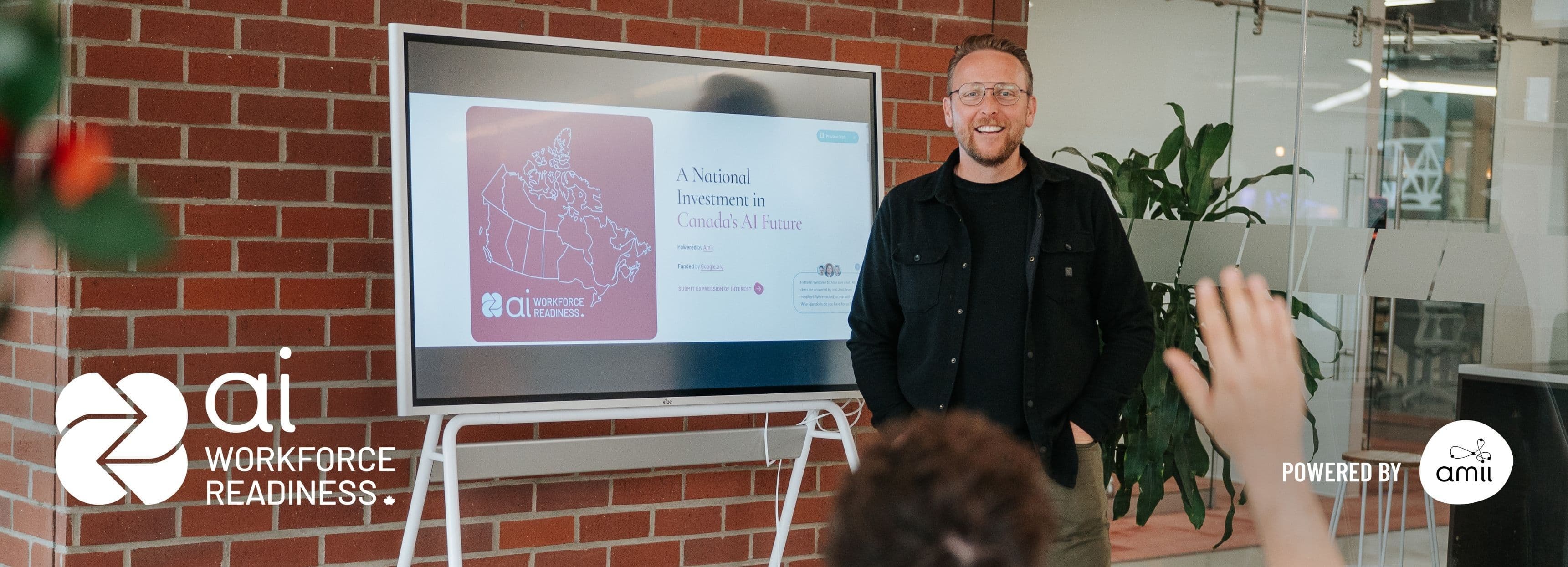
Amii's AI Workforce Readiness program continues to build momentum since being announced at Upper Bound last year. Supported by Google.org, the initiative aims to equip more than 125,000 Canadian students with foundational AI skills each year. Now with 41 post-secondary institutions in the consortium (and growing), the consortium is excited to announce the development of the first five Curriculum Resource Packages, domain-specific toolkits designed to help post-secondary instructors integrate essential AI competencies for students.
“It’s been incredible to collaborate with post-secondary institutes across Canada addressing the critical issue of AI workforce readiness on a national scale,” says Clay Lowe, Manager of the AI Workforce Readiness program. “Our team of leading experts are designing AI curriculum resources to directly address urgent needs for high-impact AI readiness and skills in domains where human-centered attributes will be vital competencies to complement emerging AI capabilities.”
"This is one step towards closing the AI skills gap in Canada and Google is proud to support this work through our AI Opportunity Fund."
- Sabrina Geremia, VP & Country Managing Director, Google Canada.
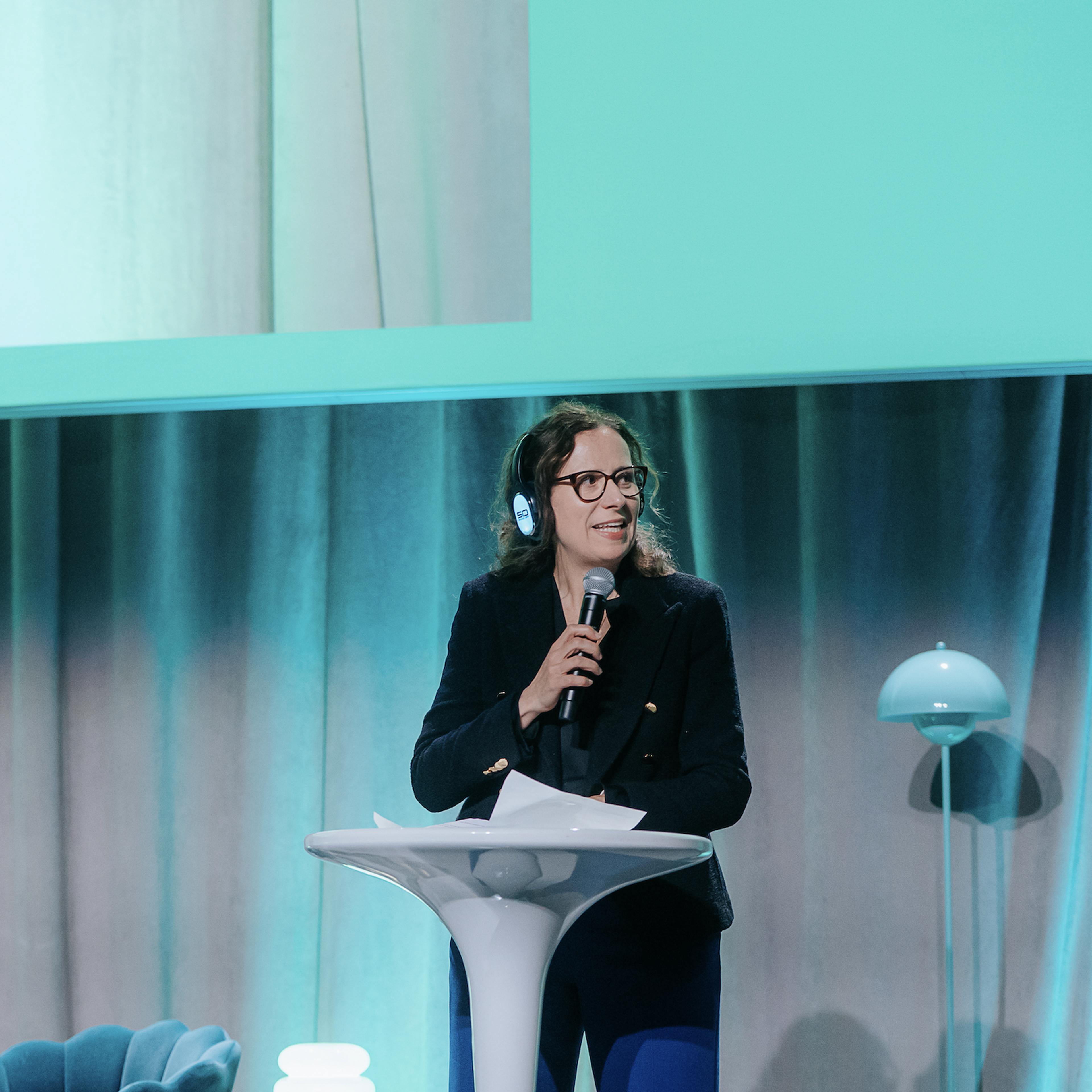
Photo: Sabrina Geremia at the launch of Amii's AI Workforce Readiness program at Upper Bound 2025.
This marks a major milestone for Amii’s AI Workforce Readiness (AIWR) initiative, integrating advanced, open-source AI learning materials across 41 institutions nationwide.
To create the Curriculum Resource Packages, Amii’s Machine Learning Educators are collaborating with subject matter experts (SMEs) from members of the AIWR consortium. These five ready-to-use toolkits will enable post-secondary instructors to effortlessly adapt AI learning tools and integrate them into specific programs.
Quote from Google Canada:
"It's great to see Amii's AI Workforce Readiness initiative to equip Canadian students with foundational AI skills taking off. By launching domain-specific curriculum packages across 41 institutions, Amii is providing Canadian students in sectors like nursing, finance, and the sciences with the tools they need to harness the potential of AI responsibly and effectively. This is one step towards closing the AI skills gap in Canada and Google is proud to support this work through our AI Opportunity Fund." - Sabrina Geremia, VP & Country Managing Director, Google Canada.
Curriculum Resource Packages In Development
1. AI in Financial Investment and Accounting
Developed with SMEs from Athabasca University & Thompson Rivers University
From strategy to reporting, this package prepares future analysts for the pace and complexity of modern finance. This is designed to cultivate professionals who can effectively partner with AI tools to manage complexity, enhance efficiency, and elevate the quality of their work.
2. AI in Technical Communication
Developed with SMEs from University College of the North & Southern Alberta Institute of Technology
Designed for students in Engineering and Digital Technologies, this package is to help students use AI as a collaborator for technical communication. From rapid drafting of documentation (specifications, SOPs) to creating consulting materials (presentations, emails), students learn the tools and workflows they’ll encounter in the workplace.
3. AI Tools for Computational Biology
Developed with SMEs from Kwantlen Polytechnic University
With an emphasis on biological image and genomic data analysis, students gain hands-on experience applying AI across key sectors like genomics, agriculture, and biotechnology
4. AI in Early Childhood Education
Developed with SMEs from Red River College Polytechnic
This package is to help the next generation of Early Childhood Educators leverage AI for curriculum planning. By streamlining administrative tasks like lesson planning, AI gives teachers more time for students, giving them extra help tailored to their learning pace and style.
5. AI in Nursing and Healthcare Practices
Developed with SMEs from University of British Columbia Okanagan, Bow Valley College, MacEwan University, and British Columbia Institute of Technology (BCIT)
Students learn how to safely and effectively integrate AI tools for applications such as clinical decision support, predictive patient monitoring, and optimizing resource management, so they can spend more time where it matters most: patient care.
Module 0: The Intro to AI Literacy
AIWR consortium members also have access to Module 0. This concise, three-hour course lays the essential AI literacy foundation for post-secondary students. Built on UNESCO’s AI Competency Framework for Students, this module ensures learners understand not just how AI works, but how to apply it effectively and responsibly in their training, study and future professional lives. The AIWR team worked with pilot institutions across the country, gathering insightful feedback and refining Module 0 into a proven learning asset for foundational AI skills.
Through Module 0, the AIWR program aims to provide this foundational training to an estimated 125,000 students per year, playing a critical role in closing the national AI skills gap.
Want to Help Create the Next Curriculum Resource Package?
To successfully close the widening gap between workforce demands and student AI preparedness, we must develop more industry-specific Curriculum Resource Packages. In late January, we’re calling on subject matter experts (SMEs) from members of the AIWR consortium to join us in the next phase of this collaboration. We encourage you to reach out to the primary contact at participating member institutions to learn how you can get involved.
A Warm Welcome to Our Expanding AIWR Consortium!
We're also thrilled to share a significant expansion of the AI Workforce Readiness (AIWR) program! Amii extends a warm welcome to the group joining this initiative, bringing our total network to 42 post-secondary institutions nationwide!
We are proud to partner with this expanding consortium, solidifying our ambitious goal to ensure Canadian students are equipped to lead in an AI-driven world. We look forward to collaborating with all 42 institutions as we move into the next phase of resource development and deployment.