From unlocking the past to building an inclusive future, Amii researchers are using AI as a powerful tool for language preservation and discovery.
Language is a rich and powerful communication tool used across cultures to convey sounds, thoughts, feelings and ideas. It is a universal living repository of human history, culture, wisdom, and identity, and it is one of the unique things that make us all distinctly human.
Yet, across centuries and continents, vast portions of human language remain either ignored by modern digital infrastructure or locked away in forgotten historical texts.
Two Amii researchers are tackling both ends of this linguistic spectrum using artificial intelligence. From ensuring modern African languages have a place in the age of generative AI to deciphering mysterious 15th-century manuscripts, groundbreaking projects led by researchers Ife Adebara (Amii Fellow and Canada CIFAR AI Chair) and Greg Kondrak (Amii Fellow) demonstrate how AI can bridge the gap between digital accessibility and ancient history.
Empowering African Languages for the Future
While global conversation often focuses on automated productivity, Ife Adebara, Amii Fellow, Canada CIFAR AI Chair, and an assistant professor at the University of Alberta, uses AI to ensure millions are not left behind.
Most AI tools are trained on English, Chinese, and European languages, leaving millions of people who speak African languages severely underrepresented. This digital divide risks cutting communities off from AI advancements in education, healthcare, and infrastructure.

When a language isn’t in the data, its speakers aren’t in the product, and AI cannot be safe, useful or fair for them. They end up missing the necessary language technology tools that could support service delivery. This marginalises millions of people and increases the technology divide.
Ife Adebara, Amii Fellow & Canada CIFAR AI Chair
To address this, Adebara co-leads the African Next Voices project—an international collaboration backed by the Gates Foundation, Meta, and African institutions. As detailed in The Conversation, the initiative is collecting the largest African language voice dataset for AI to date.
If we succeed, built-in AI in African languages won’t just be catching up. It will be setting new standards for inclusive, responsible AI worldwide.
Focusing on automatic speech recognition (ASR), the team collects ethically sourced speech data across Kenya, Nigeria, and South Africa. Spanning dozens of languages—including isiZulu, Hausa, Yoruba, Kikuyu, and Igbo—these diverse samples cover everything from healthcare and agriculture to daily conversations.
By training models to process spoken dialects, Adebara is laying the foundation for localized voice assistants, medical tools, and educational chatbots, ensuring people can access technology in the languages they live in.
Unlocking Coded Mysteries of the Past
While Adebara and her team build AI for the future, Greg Kondrak, Amii Fellow and University of Alberta computing science professor, uses computational linguistics to unlock history’s hidden secrets.
Roughly 1% of surviving historical manuscripts are written in code, hiding political secrets, love letters, and ancient remedies. Deciphering these documents manually can take a lifetime. Featured in La Presse, Kondrak leverages natural language processing (NLP) to crack these cryptographic enigmas in minutes.
)
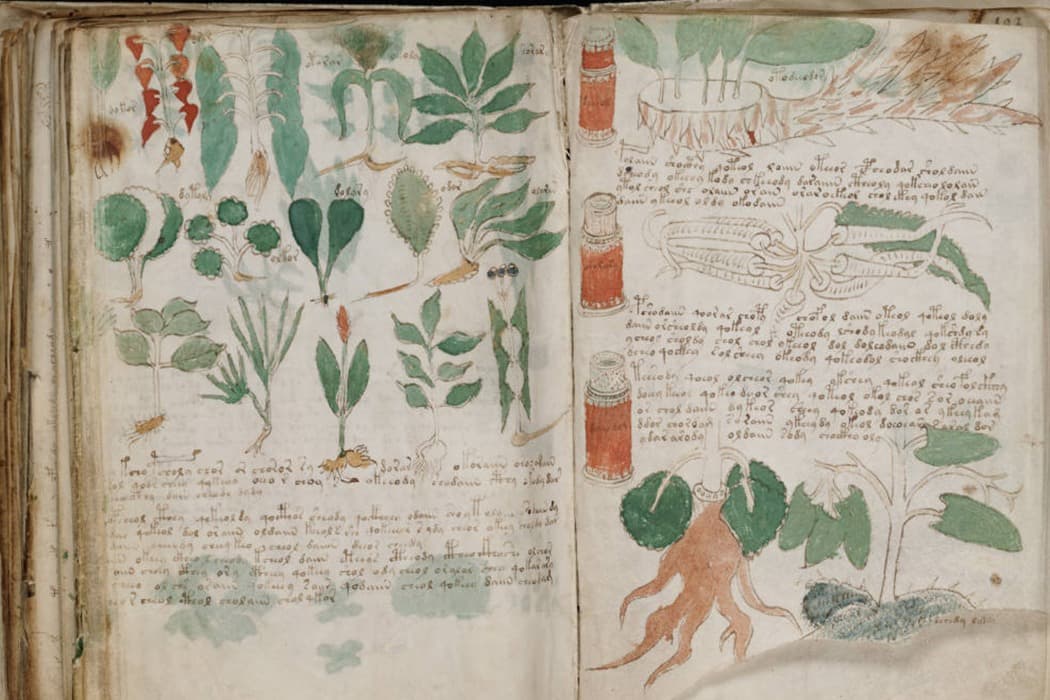 The 15th-century Voynich Manuscript. Photo source: The Paris Review
In 2018, Kondrak and researcher Bradley Hauer used NLP to analyze the famous 15th-century Voynich Manuscript, identifying Hebrew as its most probable underlying language. Later, his team applied algorithmic models to Edward Elgar’s 1897 Dorabella Cipher, discovering it aligned with musical notation rather than text—revealing a hidden, playable melody.
Acting as intelligent "copilots" for historians, these AI models reveal patterns across millions of characters, opening new doorways into centuries of human thought.
Research: Advancing the Science of AI
Stay in the loop
Sign up for regular email updates from Amii, including news and events, new podcast episodes, research updates, and more. You can update your email preferences or unsubscribe at any time.